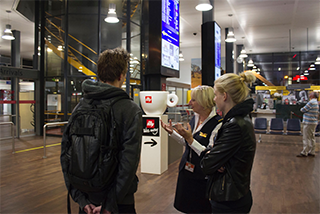
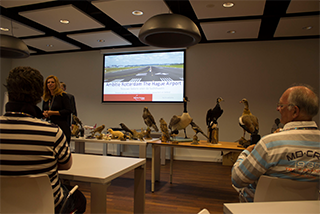
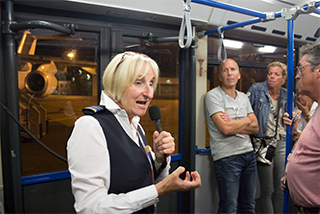
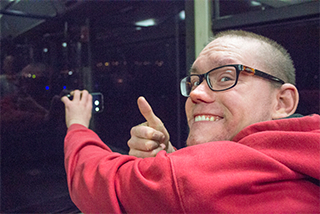
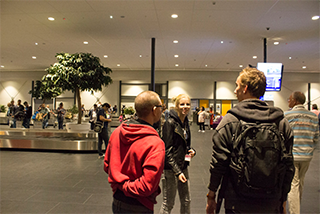
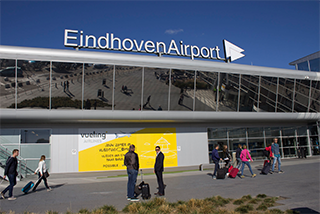
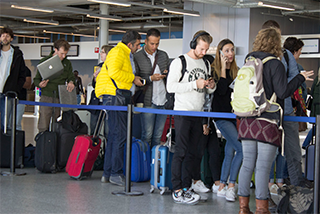
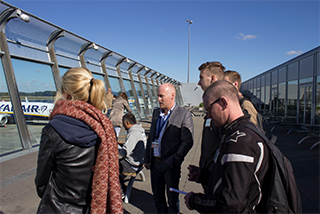
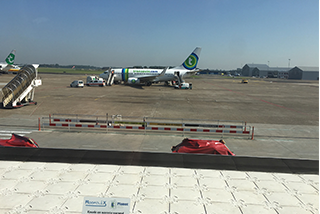
As designers we were assigned with simplifying a small part of the air travel boarding procedure. We started by doing research on the travel boarding procedure. We collected new insights during a tour by Rotterdam and Eindhoven Airport. There we spoke with a Air Traffic Controller and a logistics manager about the technical advancements at the airport. We also spoke with travelers and observed their behavior. Based on this information we shaped three concepts and we presented these to VanBerlo. Finally we picked one of these concepts and developed it into a working prototype. In this case study you will find more information about our design process and the final result.
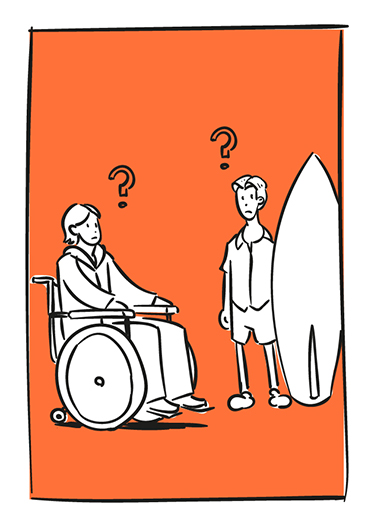
A personalized item, that provides travelers with special needs (people in wheelchairs, people with huge luggage, elderly people or children) with information at the right time. Currently it is not clear for travelers what the procedure is for their kind of need. Every situation is different at each airport. We want to help those travellers navigate flawlessly through the airport so they can feel more confident during their stay at the airport.
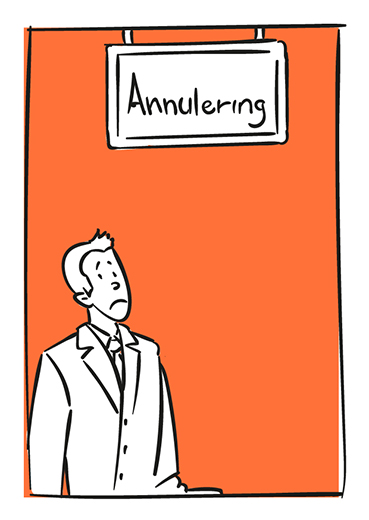
In an insecure and unexpected situation (like a flight cancellation or a missed flight) we want to help connect travelers with the same problem and the same solution. The airport organization will look for different solutions for these problems. Currently travelers have to wait in line before a desk to use these solutions. When people choose a solution inside an app the airport organization will instantly know which people have chosen a solution. These people can then be connected to each other by the airport organization so they can gather at a common spot.
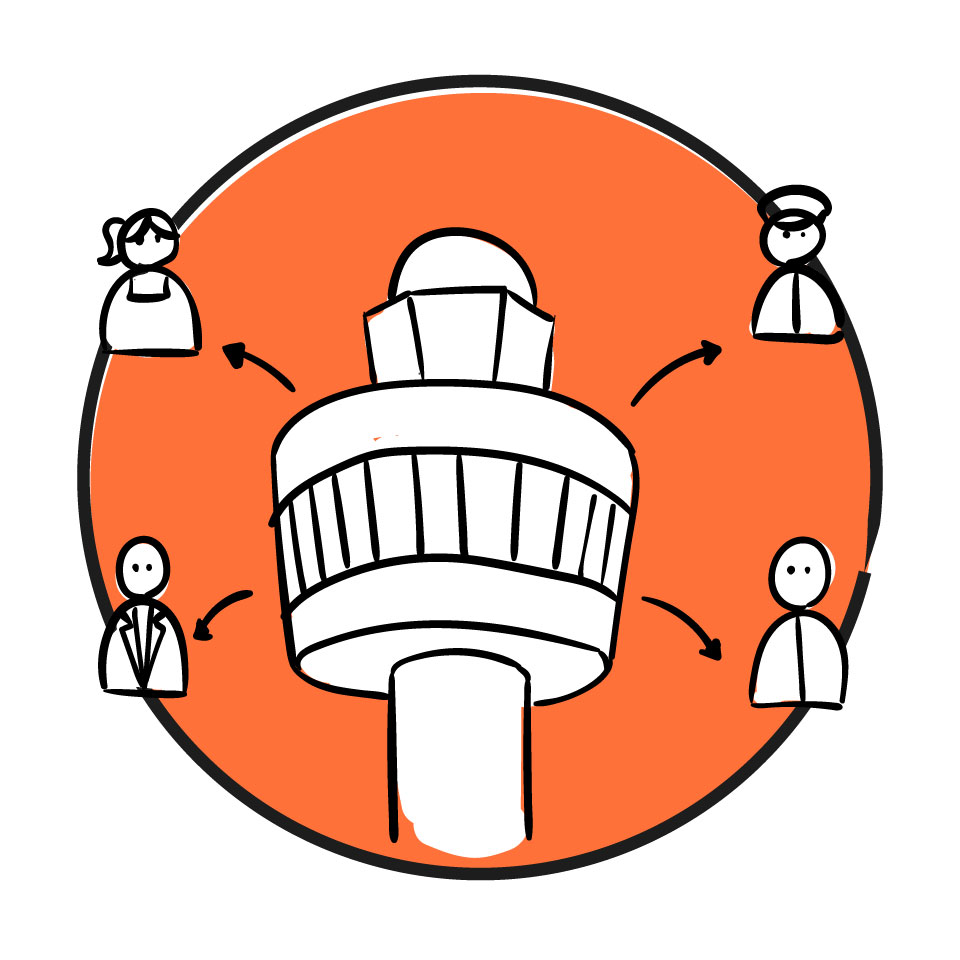
An object or device that empowers personnel to provide better support to travelers. The service provided by personnel is already being changed by the upcoming of the self-service machines. Personnel is moved towards the other side of the desk. They cannot ʻhideʼ behind their desk anymore. A more active attitude is expected from personnel. Another result is that personnel is more quickly approached by travelers with questions.
VanBerlo found the concept about unsuspected situations most interesting because of the challenges that were lying ahead. We had to come up with a strong interaction for the time when travelers are faced with a negative experience and providing a solution is critical. It is a great UX challenge to show the end-user good alternatives in an intuitive way.
Passengers are entitled to services and compensation depending on how long they have to wait and how much later they arrive.
Passengers are entitled to services, compensation or refund if they have been informed two weeks prior to their flight or later.
Passengers are entitled to services like food, drinks and overnight accommodations, depending on the time they have to wait.
Passengers are also entitled to a refund of their ticket. If passengers choose to refund they are no longer entitled to airliner services.
Passengers are entitled to compensation between € 250 and € 600 depending on E.U. borders and flying distance.
A flight has been delayed, all the 180 passengers have been stranded at the airport.
The airliner registers the flight in a backend system. All connected parties have insight in the stranded passengers.
All parties involved can indicate what they have to offer. For example, a hotel can offer 45 rooms for a night. The hotel offers the rooms for a reduced price to the airliner.
The passenger can pick a solution and gets insight in how the price for a solution is established. Sometimes they get a cashback. In other situations they might have to pay an extra fee.
A different airliner has scheduled a flight to the same destination leaving from a different airport. They indicate how many seats they have available. The Passengers register for this flight inside the app (first come first serve). They get redirected by the ground handler to a bus, train or taxi. The original airliner pays for the cost. If the additional cost is larger then the compensation a passenger is entitled to they have to pay an extra fee.
Airliners will have a solution for their clients when a flight is canceled. Other airliners can offer solution to passengers who are stranded and get empty seats filled.
Airport shops and restaurants can get new customers by offering their services. A coffee bar can offer a vouches and receive new customers.
Passengers have rights, which were created by the European Union. These rights are used to get a base price for alternative flights, hotels, food and drinks.
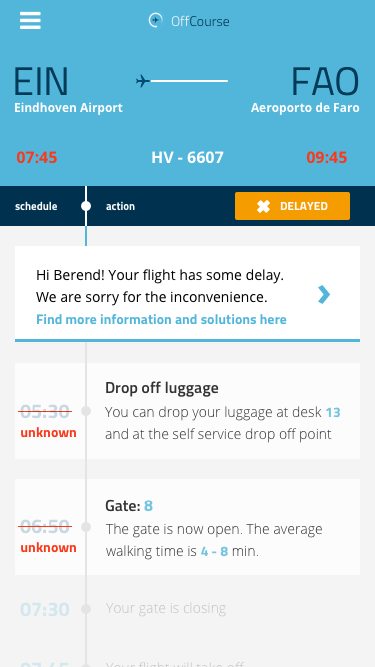
The lead booker gets a text message from the airliner which redirect them to our web applicaton: Offcourse. They will find more information about their flight, alternative solutions, and their rights as a traveler. The lead booker is also kept informed by notifications.
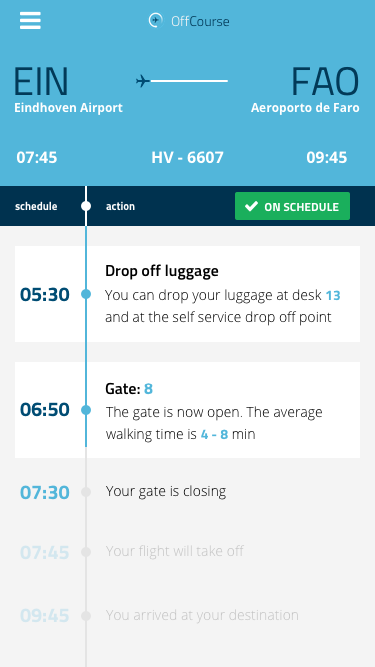
The main booker receives a text message which redirects them to their flight plan. This is an overview of all his activities. At this point in time there are no delays and their flight will still arrive on time.
if the flight is delayed or canceled, the traveler will receive a new flight plan.
The traveler will see more updates about their delayed flight, alternative solutions and information about his rights as a traveler.
Our research has shown that the ground handler at the airport organises solutions in cooperation with the airliner. The flight will be delayed as long as possible before it gets cancelled, so the new solution can be organised. Offcourse offers alternative flight information to travellers so they won't have to wait before the airliner and the ground handler make their solution available.
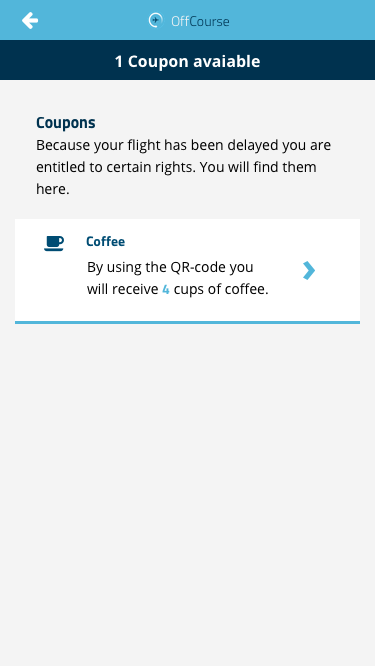
The traveler has certain rights when their flight is delayed. After 2 hours of delay, the traveller is entitled to a beverage. In Offcourse they will be offered a voucher for a cup of coffee. The can pick it up at their favorite restaurant by scanning the QR code.
For the heading we used Titilium Web. It is a powerfull font with an extensive set of characters. We used this font to display the important information in a small overview.
We chose Open Sans for bodytext. The main reason for this choice is readability. It is important that the user can easily read the content and that they feel assured.
The colors that are used are white, grey and blue. This makes the design easy to read and understand. The blue tones are mostly used for highlighting the important information. Also blue is a very trustfull color.
The secondary colors are mostly used for different states. For example ‘delayed’ or ‘on schedule’. We also used this color for the ‘time left’.